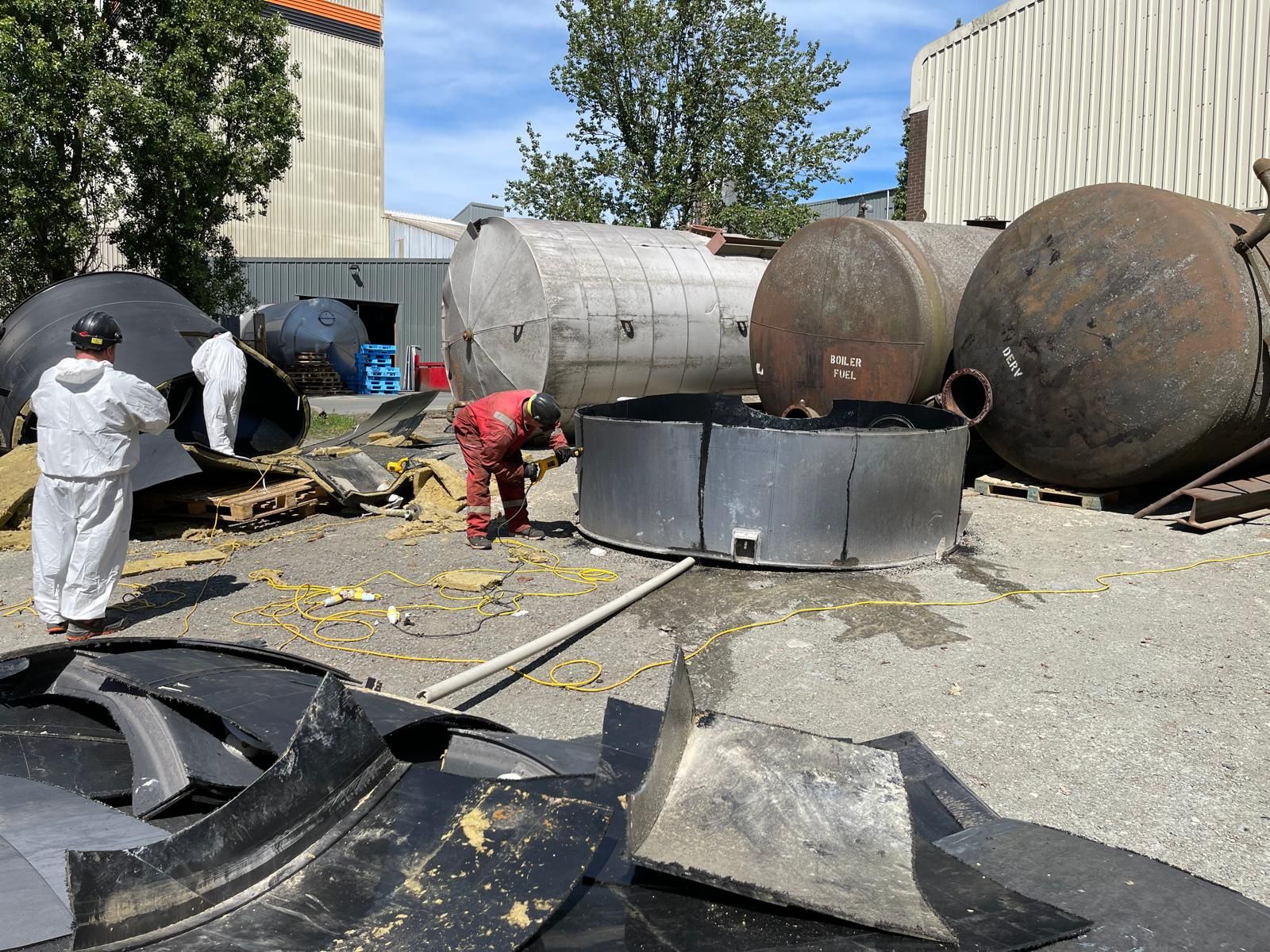
Teesside's industrial identity runs through everything we do here. Wilton, Seal Sands and Teesport carry decades of chemical, process and heavy engineering history, and decommissioning that legacy, plant, pipework, tanks, storage vessels, is specialist work that needs the right sequencing, isolations and understanding of what a process site can still hold, even years after production stopped.
Beyond the process industry corridor, Teesside is also a place people live and trade: Stockton-on-Tees and Thornaby's town centres, Billingham's postwar housing and industrial estates, Redcar and Eston along the coast, Yarm's more affluent riverside streets, and Guisborough sitting at the edge of the North York Moors. Each of these brings its own mix of building age, ground conditions and access, from tight Victorian streets to open industrial yards.
Coastal exposure at Redcar, Seal Sands and Teesport is a genuine factor in how we plan work here, salt-laden wind accelerates corrosion on old steelwork and tanks, and demolition sequencing has to account for structures that are weaker than they look on paper. Made ground across the wider Teesside area, much of it built up over decades of industrial fill, also needs proper investigation before any groundworks or remediation begins.
Road links across Teesside are strong: the A19 runs the length of the area connecting Stockton, Thornaby and Wilton, the A66 gives access west towards Middlesbrough and Darlington, and the A174 serves Redcar, Eston and Guisborough along the coast. That network makes plant mobilisation and muck-away logistics straightforward for most sites, though estuary crossings and tidal working near Seal Sands and Teesport need planning around access windows.